


Consumers know what cashew nut is now that it is widely available. Nonetheless, most users just consume the kernel, while other important parts stay unused. Have you often wondered why we use animals? Generally, the cashew shell, known as the seed, is of most concern. The nut inside is usually eaten, but the shells are overlooked. In fact, they have several remarkable features. Let’s learn about cashew nut shell uses.
Does cashew have a shell?
It belongs to the same family as poison ivy, producing an oil that is very similar. The cashew seed is surrounded by a hard shell and that shell contains a liquid-filled lining, so the seeds are often sold out of their shells. Coming into contact with this caustic fluid may cause a rash or physical burns on your body. What we usually think of as a nut is found between outer layers of hard shell, keeping cardol and anacardic acid inside.
Cashew nut shells are special because their calorie amount is very high, reaching 4800 Kcal/kg; they are better than several biomass fuels such as groundnut shell, wood chips, firewood, mustard straw and rice husk. Its high energy content means that cashew shell biomass can be used as a substitute for coal by industries.
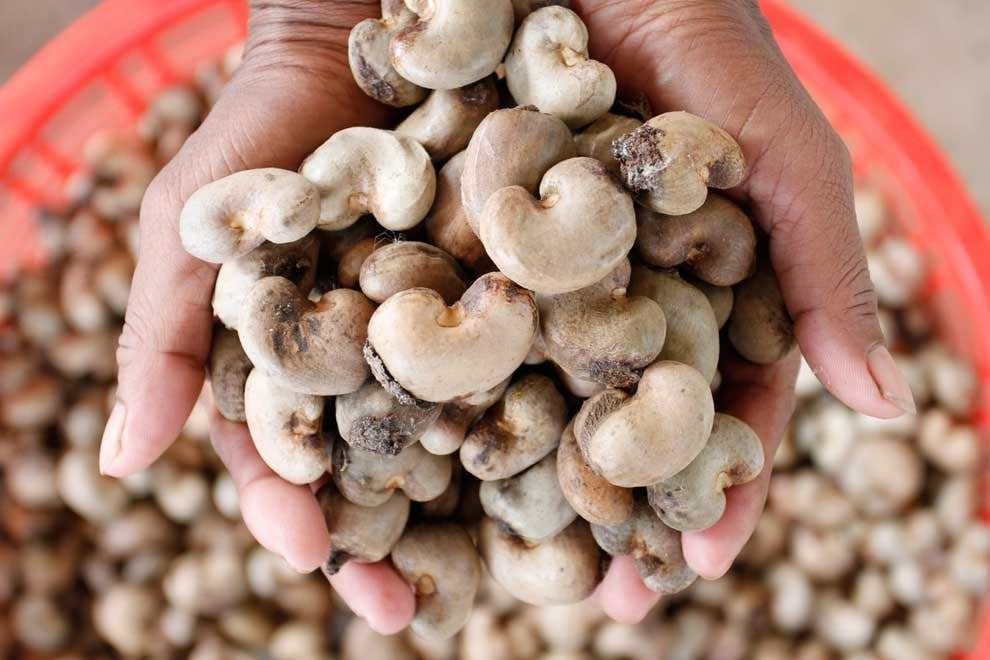
Some cashew nut shell uses
Let’s go over some of these products and how you should get rid of them.
- Cashew shells have plenty of energy and can function as fuel in various industrial boilers and furnaces.
- In animal feed, cashew shells are sometimes given to cattle, poultry and pigs. Having high fiber helps with the digestion of animals.
Those shells that enclose the cashew fruit are rich in nutrients, especially nitrogen, phosphorus and potassium and can be used to make fertilizer.
In certain areas, cashew shells power boilers and furnaces which can cause price changes. Cashew shells as fuel are priced differently due to where they are sold and the types of fuel used nearby.
- The best way to recycle cashew shells is by composting them together with your organic waste to make soil rich in nutrients. You can apply compost in your garden or on your farm.
- If you cannot compost, landfill may be the best place to put your cashew shells. Even so, this doesn’t protect the environment and can increase air pollution.
- Each year, cashew shells are recycled into things such as particleboard and paper.
To be careful, do not burn cashew shells in an open fire because their oils can irritate your lungs. When cashew shells are used for animal feed, they should be checked to avoid using them if they may contain harmful substances.
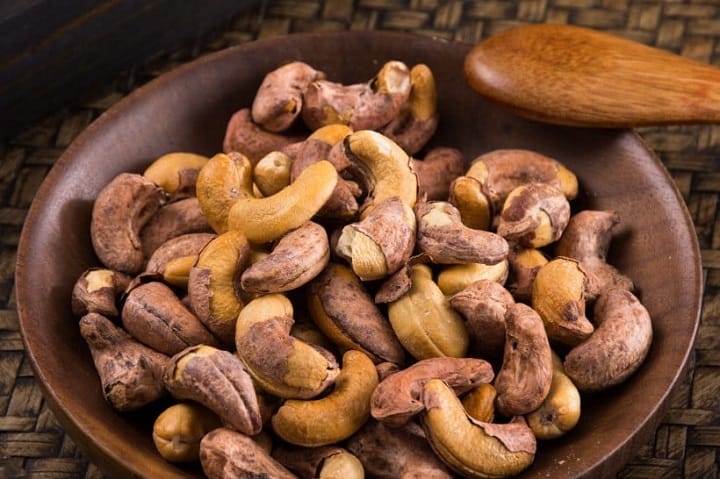
Energy from a cashew nutshell
Cashew nut shells are among the most accessible sources of tropical waste that can power energy-generation. Most of the cashew fruit is made up of its hard shell, while 30% or so is nut. People all over the world eat cashews, yet because the cashew shells are difficult to open, the nut is usually peeled during production in factories. Usually, the cashew shell is 0.4 cm thick, making up about 60% of what the grain weighs. A honeycombed porous layer: between the outer shell and the phenolic oil is the cashew nut shell liquid (CNSL). Its shell is grayer than most, very sturdy and has silk all around it.
The next figures display a summary of cashew nutshell.
The composition of cashew shells contains cellulose, sugar, minerals, protein, ash, carbon and cashew nut shell liquid.
When you have 1000 kg of raw cashew nuts, you’ll end up with 35 to 45% cashew nuts. If approximately 350kg nuts are harvested, the system shows the mass flow of the cashew nut processing.
Between 25% and 35% of hard cashew nuts contain Cashew Nut Shell Liquid (CNSL) which damages the tissues it touches. CNSL shares the same quality and heat content as Light Fuel Oil (LFO). Both the CNSL and CNS can be used to produce clean energy as biomass fuel.
Bio-oils have a greater heating power than biochar, comparing 32 MJ kg-1 of bio-oil to 30 MJ kg-1 of biochar. Pure bio-oil can’t be used, but it can be combined with diesel to form a mix. Bio-oil in the gas-phase mainly consists of CO2 and CO until a temperature of 4000C, with increased H2 production.
Gasification is the practice of using heat and chemicals to convert carbon fuels into flammable gas without full combustion. Gas from the combustible gas can power internal combustion engines, keep gas turbines running, be burned directly or be made into methanol or hydrogen.

Advantages and disadvantages of cashew nut shell uses
Advantages of cashew nut shell uses
Cashew shells usually become waste and, if dealt with improperly, can be harmful to the environment. Besides serving as food sources, these shells may help us make biofuels and reduce our need for fossil fuels while lowering greenhouse gas emissions.
Besides making biofuels, cashew shells can be used to create energy from gasification. Low-oxygen heating of the shells is done to produce gas for electricity or heating. Swapping cashew shells for fossil fuels will lower greenhouse gas emissions and help the environment.
Oil in the oil nut was slowly removed when the temperature reached 2000 degrees. After raising the temperature to 4000 degrees Celsius, almost 9 out of 10 pieces of oil were removed. The charcoal made from shelling the cashew carried the smoky and darker color of coal to make it unique. If you heat charcoal up to 6000 degrees Celsius, the structure of the charcoal is greatly altered. Slightly yellow burn marks form in and around the site. Even though cashew shells produce energy, we have to be watchful during production, because they may become toxic.

Disadvantages of cashew nut shell uses
There are several issues that can happen when using cashew shells. Shell processing is hard because they are both hard and brittle, causing frequent breakage and the production of dust. It becomes more difficult for the product to be managed and moved.
The variation in how well cashew shells are formed or composed can mean they do not suit every task suitable for shells. For example, the amount of anacardic acid or phenolic compounds in shells from different areas makes a difference in producing effective drugs or biofuels.
You usually won’t see cashews in their shells, as the shells contain urushiol like poison ivy and oak do. Sometimes, urushiol leads to skin rashes and various allergic problems in people. Before you buy them, cashews are cooked to get rid of the harmful outer coating. Removing the outer shell makes the nut safe to eat.
In addition to safety, getting cashews out of the shell is trickier. The bare cashew kernel is connected to the herb-like cashew apple at the bottom, while the shell is especially hard to open. Separating the shell from cashews takes a lot of time and involves special equipment which raises the cost of marketing these nuts.
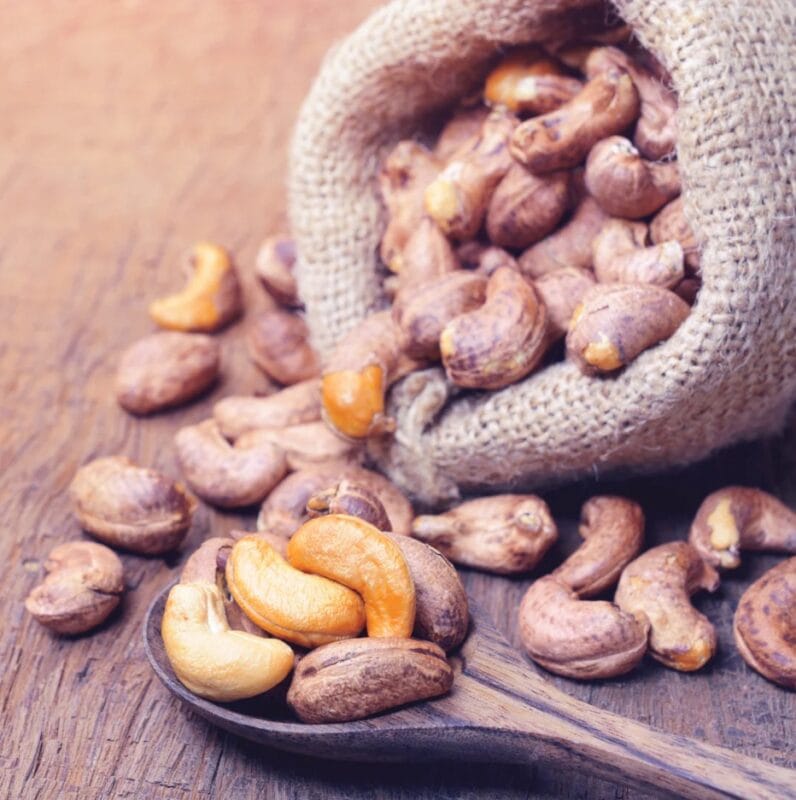
To make it easier, cashews are often sold with their shells off and processed so they’re ready to handle.
Conclusion
That’s all about cashew nut shell uses. Cashew shells can be used in many ways, bringing benefits to industry, farming and our environment. Thanks to anacardic acid, phenolic compounds and additional unique components, we can design solutions that benefit the environment and everyone.
In Vietnam, Greatfoods is among the top cashew producers and exporters, concentrating on making sure cashews are both of good quality and their production waste is used such as cashew shells. Thanks to modern factories, stringent quality checks and an emphasis on being green, Greatfoods continues to grow and become established among other international food brands. As well as offering great cashew products, the company also leads the way in researching how to use cashew shells for clean energy and environmentally friendly materials. It clearly demonstrates what a circular economy could achieve in the cashew industry of Vietnam.
For inquiries and orders, please contact us at:
- Facebook: Greatfoods
- Youtube: Greatfoodsvn
- Email: [email protected]
We are happy to partner with you in the future!