


The peppercorn plant is an unusual vining plant that produces one of the most widely used food additives in the world. Here’s all about the black pepper plant!
What is the Black Pepper Plant?
The black pepper plant (scientific name Piper nigrum; commonly known as the peppercorn plant or pepper tree) is a flowering vine that produces green flower spikes and small, dark fruits (or drupes) called peppercorns, which can be dried and ground into a popular table condiment.
The black pepper, a tropical plant native to southern India and now prevalent in Indonesia, Southeast Asia, Vietnam, Brazil, and other tropical locations, prefers warm, humid climates with mild winters (equivalent to USDA Hardiness Zone 12). Winters in the United States are never warm enough for year-round black pepper cultivation, while perennial black pepper growth may be possible in the country’s south. In other locations, gardeners can grow black pepper vines as a decorative annual or put the black pepper plants indoors or into a greenhouse during the cold months.
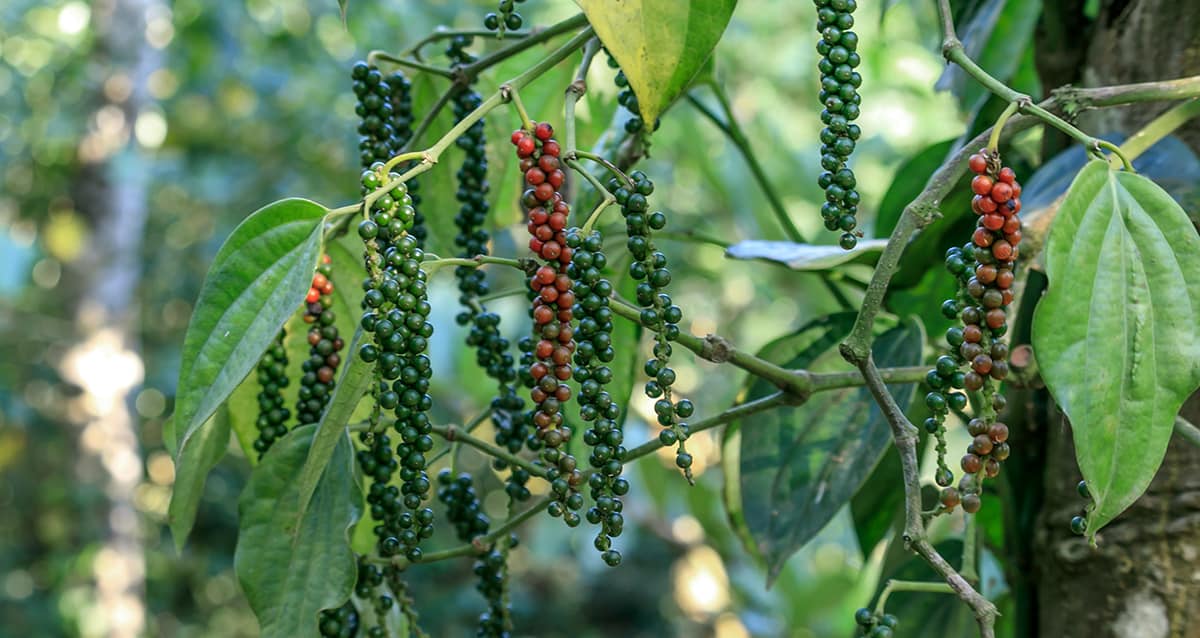
The black pepper plant is a woody climber that may reach heights of ten metres using its aerial roots. The large lustrous green leaves are placed alternately. The little blooms are arranged in thick thin spikes of approximately 50 blossoms each. The fruits, often known as peppercorns, are drupes measuring around 5 mm (0.2 inch) in diameter.
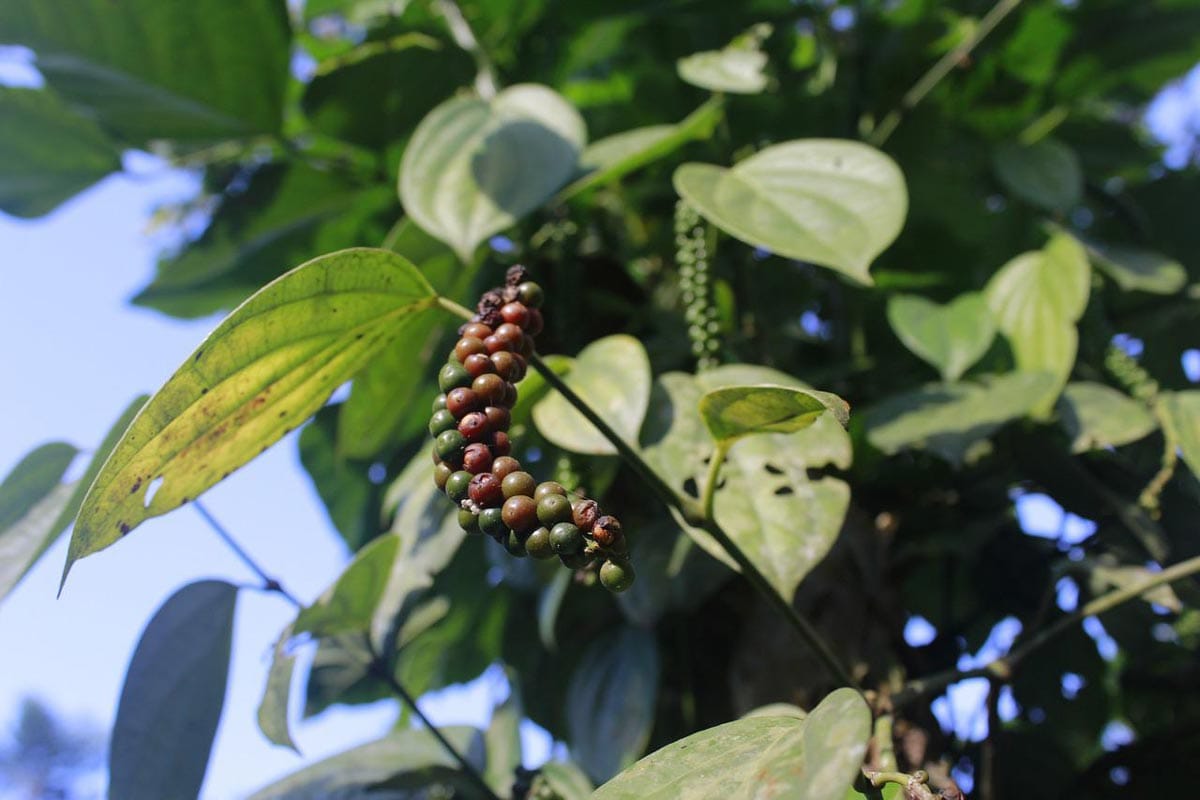
When they reach maturity, they turn yellowish red and produce only one seed. Their odor is intense and aromatic, and their flavor is spicy, biting, and extremely strong. Ground black pepper contains up to 3% essential oil, which has the aromatic flavor of Capsicum peppers but lacks the pungency. The distinctive flavor is derived primarily from the chemical piperine, but the seeds also include chavicine, piperidine, and piperettine.
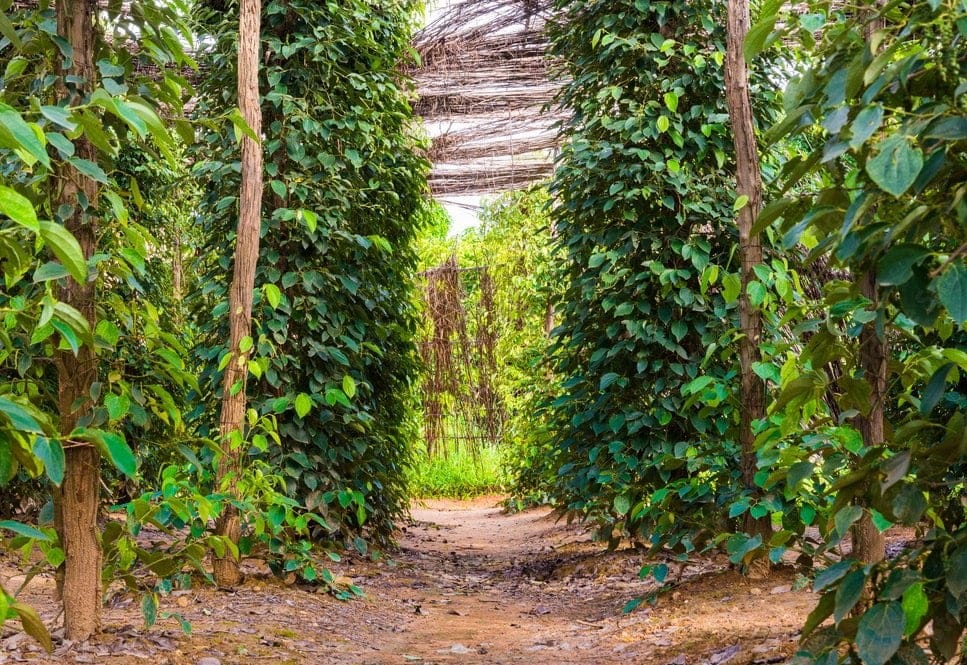
For optimal growth, the black pepper plant requires a long wet season, relatively high temperatures, and partial shade. Stem cuttings are typically used for propagation, and they are placed near a tree or a support pole. Black pepper plants are sometimes found in tea and coffee estates. They begin bearing in 2 to 5 years and can yield for up to 40 years.
The fruits are plucked when they start to turn red. The harvested fruits are soaked in boiling water for around 10 minutes, causing them to turn dark brown or black within an hour. Then they are spread out to dry in the sun for three to four days.
Grinding entire peppercorns yields black pepper. White pepper is obtained by eliminating the dark outer section of the pericarp, and its flavor is less intense than black pepper. The exterior layer is softened by storing the berries in wet heaps for 2 or 3 days, or by immersing them in sacks of flowing water for 7 to 15 days, depending on location. The softened outer layer is then removed by washing, rubbing, or trampling, and the berries are placed in the sun to dry. Whole white pepper can also be made by mechanically removing the outer layer.
The Use of The Black Pepper Plant
Black pepper plant is made up of entire green berries that have been dried until black. Clusters are harvested when the berries have matured but remain green. The berries are stripped, steeped in hot water for about ten minutes, and then dried in the sun, usually on bamboo mats stretched out on a big, flat concrete surface or patio. They are then scraped and shifted in the sun for approximately two weeks before being packed for shipping, processing, and packaging as whole or ground black pepper.
Black and white pepper are commonly used as flavoring agents in food and beverages, such as meat and meat products, baked goods, sauces, condiments, and relishes, as well as alcoholic and non-alcoholic beverages. White pepper is less strong and has a more mellow flavor, making it ideal for white sauces and light-colored meals.
Pepper oil is a colorless to free-flowing green oil obtained through steam distillation, primarily from black pepper and the pulp discarded while producing white pepper. However, pepper oil lacks the spiciness and flavor of black or white peppers. The active ingredient that gives pepper its bitter taste, piperine, is insoluble and only found in trace amounts in the oil.
Pepper oil is gradually being replaced by oleoresins derived from berries using an edible organic solvent. The oleoresins are then emulsified with gum arabic (Senegalia Senegal). Pepper oleoresins are high in piperine. They are commonly used as a flavoring element in canned meats, pickles, and bottled sauces, replacing black and white pepper.
Pepper oil is used as a fragrance for its peppery undertones, particularly in men’s colognes and aftershaves. Nonetheless, it is used in limited amounts in several scents, such as ‘Le Jardin D’Amour’ and ‘L’Interdit.
Health Use
The alkaloid ‘Piperine’, found in concentrations of up to 9% in dried black pepper berries, gives them their peppery or bitter taste. Piperine’s activity stimulates the digestive and circulatory systems.
Piperine functions as a rubefacient, dilating the capillaries and boosting blood circulation to the parts of the body it travels through. It is sometimes added to topical ointments and creams to achieve this effect, and it has shown promise in the treatment of some skin conditions, including vitiligo.
Black pepper is widely used in home remedies to address digestive issues such as stomach pain, flatulence, constipation, and bloating. It is often ground and mixed into warm liquids for individuals with fever.
Vietnam Black Pepper Plant
Vietnamese pepper has been sold to around 80 nations and territories. Exporting high-quality goods, particularly to the United States and the European Union, is expanding. Vietnam’s pepper industry has advanced due to good natural and human conditions, as well as the utilization of technology in production and processing. Vietnam is becoming more involved in regional and international markets.
Black peppercorns are derived from the berries of black pepper plants. Vietnam black peppers have long been regarded as an essential element in many kitchens around the world. Black pepper is offered whole, crushed, or powdered.
Interestingly, black pepper, green pepper, and white peppercorns are all the same fruit (Piper nigrum); the variance in color reflects different phases of maturity and processing processes. Among them, black pepper is the most popular and tasty, with a hot taste.
About Greatfoods
Greatfoods has a long history of selling and exporting Vietnamese black pepper to many countries throughout the world. We have established ourselves as a dependable and high-capacity Vietnamese black pepper manufacturer with a large number of worldwide customers.