


Consumers have heard of dried chrysanthemum as a calming herbal infusion with the mild floral flavour and possible health implications. But to international bulk buyers, the value of this product extends way beyond a basic infusion. Businesses which purchase dried chrysanthemum will need to assess agricultural origin, processing, grading, safety precunciance, and reliability of inter foundation.
Persistent availability of high quality dried chrysanthemum is one of the primary concerns in the currently competitive herbal and functional beverage industries. The present article gives ideas focused to international businesses and importers seeking dependable sources-emphasizing some areas that are typically glossed over in the consumer-side discussion.
Agricultural origin and seasonal harvest of dried chrysanthemum in Vietnam
Although China has continued to hold supremacy in terms of tea supply of the chrysanthemum tea, Vietnam has also become a competitive supplier of this tea. It is situated with the country having both a humid subtropical (in the northernmost and southern regions) and temperate highlands (central areas) climatic condition that makes chrysanthemum grow with bright and vivid flowers. Provinces that produce dried chrysanthemum flower farms include Ha Nam, Lao Cai, Lam Dong.
The harvest season is usually in the months of September to November during the cooler months in which optimum flower growth can take place. Seasonality is important to know among the bulk buyers. To follow through on large orders, the most opportune time is immediately after harvest when there is large availability of supply and stable prices. Other than the harvest periods, the suppliers become dependent on the stocks stored in cold plants, which can reduce the availability and prices.
The global supply chain is directly affected by seasonality: failure of a procurement window usually results in increased outlays, or the unavailability of top grades. Customers who will be carrying out a production all-time should have suppliers with good storage and preservation facilities.

Processing techniques of dried chrysanthemum impact quality and color retention
The drying of chrysanthemum flowers is one of the most significant factors of control of good quality in the products. Variations in appearance, aroma, and shelf life are also quite different with different methods:
- Sun-Dried: This is an ancient system where the costs are less, but weather sensitive. Flowers can become paler, becoming just slightly brown, and increase risk of microbial hazards.
- Oven-Dried: Moderate heat controlled drying. The process contributes to the maintenance of golden color and floral aroma with the reduction of moisture to the safe levels.
- Freeze-Dried: High-end processing to essentially preserve the color and aroma, but at the cost of increased cost of production.
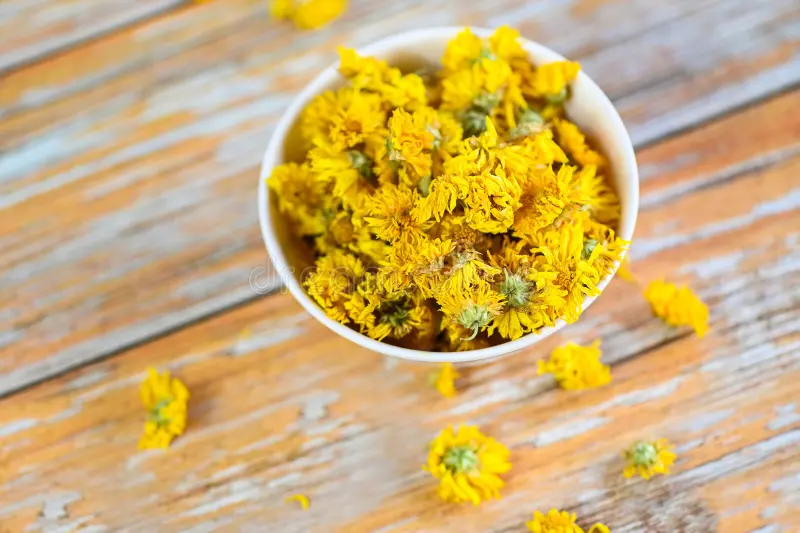
In the case of international trade, oven-drying together with the modern airflow technology is predominant. It reaches an equilibrium between cost and quality, which dries the chrysanthemum with shiny yellow color petals and consistent proper moisture (=10%).
Buyers are very concerned with the color retention. When flowers retain a yellow color that still looks fresh, then this indicates that they have been dried and stored correctly. The suppliers also resorted to fumigation-free sterilization processes, UV sterilization or ozone cleaning in order to assure food safety, not affecting the natural quality.

Market demand of dried chrysanthemum beyond tea consumption
In spite of the fact that use of dried chrysanthemum is clearly reflected through tea, nowadays its usage offers itself in diversification into few other industries as well. Chrysanthemum is most often consumed in the beverage industry as an ingredient in herbal infusions and ready-to-drink bottled teas, which are in high demand as caffeine-free healthy beverage products. The conventional as well is a major driver where majorly in China and Vietnam, the flower is associated with cooling effects and relieving stress and improving eye health.
Simultaneously, cosmetic companies also use the extracts of chrysanthemum in skincare with claims of the natural antioxidant and calming effects of the plant as marketing tactic to attract health-conscious consumers. Another growth market is based on the fact that other retailers around the world have been launching their own herbal brand of teas and therefore, bulk orders are more steady. Collectively, the above applications indicate that normal buyers such as tea manufacturers are no longer the only tea producers who consume dried chrysanthemum in large quantities; there are other companies such as pharmaceutical companies, wellness companies, and cosmetic producers who require large and stable quantities of the product.
Competitive advantage of sourcing dried chrysanthemum from Vietnam
Vietnam is gradually raising its face as a competitive exporter of dried chrysanthemum trade with its consideration of cost-effectiveness, constant quality, and compatibility with exportation. Prices offered by Vietnamese producers are competitive as they enjoy favorable growing conditions as well as relatively cheaper costs of production and this is particularly important where buyers are bulk processors operating in the price-sensitive markets. The increase of chrysanthemum cultivation areas of provinces like Ha Nam and Lam Dong over recent years has increased the production capacity leading to a stable production volume, which could support the season and year round demand.
The position of Vietnam is also strengthened by market demand. The metrics of the international herbal tea industry has been increasing consistently and through the herbal tea market’s analysis, it is expected that herbal teas will surpass USD 5 billion in the year 2030, due to consumerism in natural caffeine-free drinks. In Asia, bottled chrysanthemum beverages are already a mainstream product and have a burgeoning market in Western markets as a reflection of the rise in the popularity of beverages linked to the general wellness and functional beverage marketplace. This implies that consumers are now seeking the suppliers whose locations are not in China to diversify its sources.
Vietnam enjoys good logistical infrastructure as well. Located along with the largest ports in Vietnam at Hai Phong, Da Nang and Ho Chi Minh City, products can be shipping efficiently to markets in Asia, Europe and North America. The shorter 2 lead times and more options in containers offer additional safety to business with just-in-time inventories. Collectively, these advantages will align Vietnam as one of the desirable and reliable sources of international importers of large-volume batches of dried chrysanthemum that are economically competitive and compliant.
Conclusion
Dried chrysanthemum is not just an herbal tea but a very versatile agricultural product with beverage, medicinal and cosmetic uses. The most important factors to international bulk buyers are quality grading and food safety compliance, packaging and reliability in terms of supply.
Vietnam is an upcoming supplier of dried chrysanthemum with assured quality, competitive prices and logistics provisions to be available in the export routes globally.
In case your company is finding a consistent supply partner, Greatfoods Vietnam can provide international standard dried chrysanthemum with quick solutions to bulk buyers around the world. Apply to us now by sending us a sample and customized quotation request.
For inquiries and orders, please contact us at:
- Facebook: Greatfoods
- Youtube: Greatfoodsvn
- Email: [email protected]
We are happy to partner with you in the future!