A phytosanitary certificate is the document that lets plant material cross a border legally. It is issued by a government plant protection authority, it travels with the consignment, and without it most fresh, frozen, dried and spice shipments are refused entry no matter how good the product is. This guide explains what the certificate covers, who issues it, and where the process usually goes wrong.
It is written for importers, customs brokers, quality managers and procurement teams handling plant based food from Vietnam. Requirements differ by destination market and by commodity and they change, so treat the guidance below as a working framework and confirm the current rules with the importing country’s plant health authority before you ship.
What a phytosanitary certificate is and who issues it
The certificate is an official attestation that a consignment has been inspected and is considered free from quarantine pests, that it conforms to the phytosanitary import requirements of the importing country, and that any required treatment has been applied. It is a plant health document, not a food safety document, and confusing the two causes real delay.
Put simply, a phytosanitary certificate answers one question for the importing country: could this consignment introduce a pest we do not have? Everything on the document exists to support that judgement, which is why fields that look bureaucratic to a commercial team are treated as decisive by an inspector.
Issuing authority is always a national plant protection organisation, never a laboratory, a chamber of commerce or the exporter. In Vietnam the plant protection authority under the Ministry of Agriculture performs that role. The international framework, including the model certificate format, comes from the International Plant Protection Convention, whose texts are published by the IPPC Secretariat.
The model wording, the layout and the standard for issuing a phytosanitary certificate are set out in the international standard on phytosanitary certification. That is why certificates from different countries look broadly the same, and it is why a document that does not follow the model format should be questioned immediately.
Which food products need a phytosanitary certificate
Almost anything of plant origin can require one, and the trigger is the importing country’s rules rather than the exporter’s judgement. Processing level is the main variable: the more a product has been transformed, the less likely it is to carry live pests and the more likely it is to be exempt.
| Product state | Typical requirement | Reasoning |
|---|---|---|
| Fresh fruit and vegetables | Almost always required | Highest pest risk, living plant material |
| Frozen and IQF produce | Often required, market dependent | Freezing reduces but does not always remove risk |
| Dried fruit and vegetables | Frequently required | Storage pests remain a concern |
| Whole spices, seeds, leaves | Frequently required | Seeds and unprocessed plant parts are high risk |
| Ground spices and powders | Sometimes exempt | Milling generally removes pest viability |
| Canned, cooked and juice products | Usually exempt | Thermal processing removes pest risk |
| Wood packaging and pallets | Separate marking regime | Covered by the wood packaging standard |
Never assume from the category alone. Two markets can treat the same frozen product differently, and a market can add a commodity to its regulated list after a pest interception. Ask the importer to confirm the requirement in writing for the specific commodity and origin before the first shipment, then record the answer with a date on it.
Keep that record per product and per market rather than per supplier. Whether a phytosanitary certificate is required is a function of the commodity and the destination, so a single answer obtained for one shipment does not transfer to the next product line. A short matrix of commodity against market, maintained by the quality team, removes the question from every future order.
What the phytosanitary certificate actually says
The model format of a phytosanitary certificate is short, and every field does work. Reading it properly takes two minutes and prevents most border problems.
| Field | Content | Common error |
|---|---|---|
| Exporter and consignee | Full legal names and addresses | Trading name that differs from the invoice |
| Place of origin | Region or province of production | Left blank or stated too vaguely |
| Botanical name | Genus and species in Latin | Commercial name used instead of the species |
| Quantity and description | Number of packages, net weight, packing type | Quantities that do not match the packing list |
| Distinguishing marks | Container and seal numbers, lot marks | Container number missing or transposed |
| Additional declaration | Market specific wording required by the importer | Wording paraphrased instead of quoted exactly |
| Treatment | Chemical, concentration, duration, temperature, date | Treatment box left empty when one was required |
The additional declaration deserves particular attention. Importing countries specify exact sentences that must appear, and an inspector reads them literally. A phytosanitary certificate whose additional declaration is close to but not identical with the required wording is frequently rejected, and the consignment then waits while a replacement is arranged from origin.
How a phytosanitary certificate is obtained at origin
Obtaining a phytosanitary certificate runs on the exporter’s side and takes days rather than hours, which is why it belongs in the shipping schedule rather than in the paperwork rush before departure.
- The exporter registers with the plant protection authority and applies for inspection.
- An inspector examines the consignment, or samples it, at the packing site or a designated point.
- Any required treatment is carried out and documented by an approved provider.
- The authority issues the certificate against the inspected and identified consignment.
- The original certificate travels with the document set to the destination.
- The importer or broker presents it to the plant health authority on arrival.
Inspection happens before the container is sealed and shipped, so a phytosanitary certificate cannot be created retrospectively for goods already on the water in the normal case. Some authorities allow a replacement certificate for a lost original, but that is a different procedure with its own conditions. Build two to five working days into the plan and more in peak season.
Treatments, fumigation and heat
Where the importing country requires a treatment, the phytosanitary certificate records it in a dedicated block with the treatment type, the chemical or process, the concentration or temperature, the duration and the date. The treatment has to be carried out by a provider the authority recognises, and the record has to match what was actually done.
Fumigation is common for dried commodities and for wood packaging. Heat treatment and cold treatment are used for certain fresh products and specific pests. Irradiation is accepted by some markets and prohibited or restricted in others, and it must be declared because it affects labelling in several jurisdictions.
The parameters are precise rather than approximate. Heat treatment of solid wood packaging under the international standard requires a minimum core temperature of 56°C held for at least 30 continuous minutes. Cold treatment schedules for fruit fly control hold produce near 1°C to 3°C for a defined number of days. Frozen cargo shipped at -18°C or colder is a storage condition rather than a phytosanitary treatment, and the two should never be confused on a document.
Treatment choice is not a free decision. Several markets that once accepted a given fumigant no longer do, and buyers with organic or clean label programmes often prohibit chemical fumigation outright. Agree the acceptable treatment list in the specification before the first order rather than discovering a conflict at the port.
Wood packaging, pallets and the separate marking rule
Wood packaging carries its own regime that is easy to overlook. Solid wood pallets, crates and dunnage must be treated and marked under the international standard for wood packaging material, and the mark is stamped on the wood itself rather than recorded on the phytosanitary certificate.
Non-solid wood materials such as plywood, processed board and moulded pallets are generally outside the regime, which is one reason many food exporters use them. If solid wood is used, check that the mark is present, legible and on the right components before the container is closed. An unmarked pallet can hold up an otherwise perfect consignment even where the phytosanitary certificate for the goods themselves is faultless.
Health certificates, free sale certificates and what else may be required
A phytosanitary certificate answers a plant health question. Several markets also require documents that answer food safety, sanitary or commercial questions, and buyers frequently confuse them.
| Document | Answers | Typically issued by |
|---|---|---|
| Phytosanitary certificate | Is the consignment free from quarantine pests? | Plant protection authority |
| Health certificate | Is the product fit for human consumption? | Competent food safety authority |
| Free sale certificate | Is the product freely sold in the country of origin? | Government body or chamber |
| Certificate of origin | Where were the goods produced? | Chamber of commerce or authority |
| Certificate of analysis | Does the lot meet the specification? | Laboratory or producer |
| Fumigation certificate | What treatment was applied and how? | Approved treatment provider |
Which of these you need depends on the destination and the product. The European Union publishes formalities by product and origin on Access2Markets, and United States import procedures for food are summarised by the FDA. Our guide to food safety certifications covers the audit side of the same supplier file.
Market access, pest risk analysis and why some products are simply not allowed
A phytosanitary certificate can only be issued for a commodity that the destination has already agreed to admit from that origin. Where no market access exists, no certificate can fix the problem. This surprises buyers who assume that paperwork is always the answer.
Market access for a new fresh commodity is granted after the importing country completes a pest risk analysis for that specific commodity and origin, often followed by a bilateral protocol setting out orchard registration, packhouse approval, treatment and inspection conditions. Those negotiations take years, not months, and they are conducted between governments rather than between companies.
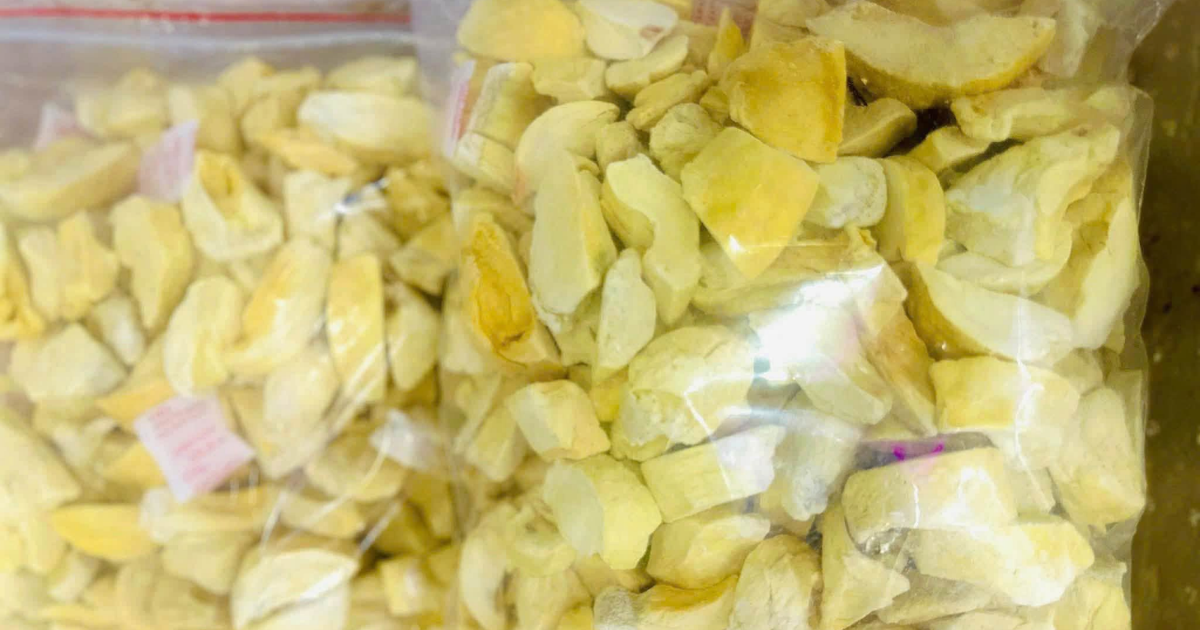
The practical rule for a buyer is to check access before quoting. If a fresh commodity from Vietnam has never been shipped to your market, assume there is a reason and verify it. Frozen, dried and processed forms of the same fruit are frequently admissible when the fresh form is not, which is why several products reach a market only in the IQF frozen or dried food format.
Where a protocol exists, it usually names the registered orchards and packhouses that may supply. A phytosanitary certificate issued for material from an unregistered site under such a protocol will not clear, even if the product itself is perfect. Ask the exporter for the registration reference when a protocol applies.
Electronic certification and the move away from paper
Plant health authorities have been moving to electronic exchange, where the issuing authority transmits the certificate data directly to the destination authority through a secure hub rather than relying on a paper original travelling with the goods. Adoption is uneven, with some markets fully electronic, some in pilot and some still requiring paper.
For an importer the practical questions are simple. Does the destination accept an electronic phytosanitary certificate from this origin, does the broker have access to retrieve it, and is a paper original still needed as a backup? Answering those three before the first shipment avoids the situation where goods arrive and the document is technically available but nobody can produce it.
Keep a copy either way. Whether the phytosanitary certificate arrives as paper or as data, the shipment file should hold a readable version alongside the invoice and packing list, because that is what an auditor or a customer will ask for months later.
Electronic exchange does not change the content requirements. Botanical name, additional declaration, treatment details and consignment identification still have to be correct, and a data error in an electronic phytosanitary certificate is just as blocking as a typing error on paper. The advantage is speed and reduced fraud risk, not reduced diligence.
Common phytosanitary certificate errors and how to avoid them
Almost every rejection traces back to a mismatch between documents rather than to a genuine pest finding. The list below covers the errors that recur.
- Botanical name missing or replaced by a commercial product name.
- Consignee name on the certificate different from the consignee on the bill of lading.
- Container or seal number transposed between documents.
- Net weight or carton count inconsistent with the packing list.
- Additional declaration wording paraphrased rather than quoted exactly.
- Treatment block left empty when the destination required a treatment.
- Certificate issued after the vessel sailed when the market requires pre-shipment issue.
- Photocopy presented where the market requires the original document.
A simple cross check prevents nearly all of them. Before the container leaves, lay the invoice, the packing list, the bill of lading and the phytosanitary certificate side by side and confirm that seven fields agree: consignee, description, botanical name, quantity, net weight, container number and seal number. Ten minutes at origin saves days at destination.
What happens if a consignment is rejected
If plant health authorities at the destination find a discrepancy or intercept a pest, the options are usually treatment at destination, re-export, or destruction. Which applies depends on the finding and on the market. All three cost money and time, and demurrage accrues throughout.
Document discrepancies are often correctable with a replacement certificate from origin, provided the market allows it. Pest interceptions are not, and repeated interceptions from one exporter or one origin can trigger increased inspection rates for everyone shipping that commodity from that country.
Those increases are published rather than informal. The European Union maintains lists that raise identity and physical checks on named products from named origins to stated frequencies such as 10%, 20% or 50% of consignments, and the lists are reviewed periodically. A commodity moving from routine clearance to 50% checks changes both the cost and the lead time of every shipment, which is why a single careless exporter can damage an entire origin.
The cost lands unevenly. Holding 1 container for inspection adds demurrage, storage and inspection fees, and for a 25 kg carton format the handling cost of a full physical check is significant on its own. Build the possibility into the landed cost model for any commodity currently sitting on an increased control list.
Allocate the risk in the contract. State who applies for the phytosanitary certificate, who pays for treatment at destination, and what happens to a rejected consignment. Incoterms allocate cost and risk in transit but do not by themselves answer these questions, so write them into the terms. Standard delivery arrangements are outlined on the payment and delivery page.
Planning documentation into the shipping schedule
Documentation failures are usually scheduling failures. The certificate depends on an inspection, the inspection depends on a finished packed consignment, and the finished consignment depends on production. Working backwards from the vessel date is the only reliable method.
- Confirm the destination requirement in writing before production is scheduled.
- Book the inspection as soon as the packing date is fixed, not after packing is complete.
- Complete any treatment before inspection where the sequence requires it.
- Check the draft certificate against the draft invoice before the original is issued.
- Courier originals early where the market requires the original document at clearance.
- Keep scanned copies of every issued phytosanitary certificate in the shipment file.
Seasonal peaks stretch every step. Inspection capacity is finite, and the weeks around a major harvest or a public holiday are exactly when a schedule built on minimum lead times fails. Availability by product and season is summarised on the seasonal availability page.
Frequently asked questions about phytosanitary certificates
Who pays for the phytosanitary certificate?
Normally the exporter, because it is issued at origin and forms part of the export document set. Treatment costs and any inspection at destination are usually the importer’s, but this follows the agreed Incoterm and the contract, so state it explicitly rather than assuming.
Do frozen products need a phytosanitary certificate?
Often yes, depending on the destination and the commodity. Freezing reduces pest risk but does not automatically exempt a product from plant health control. Confirm with the importing country’s authority rather than reasoning from the process.
Can a certificate be corrected after issue?
Minor corrections are generally not permitted by hand on the original. The usual route is a replacement certificate issued by the same authority, which takes time and may not be accepted everywhere. Checking the draft before issue is far cheaper than correcting afterwards.
How long is a phytosanitary certificate valid?
There is no single validity period, but several markets expect issue within a defined number of days before shipment or arrival. Because the certificate attests to a condition observed at inspection, an old certificate loses credibility. Check the destination rule for the specific commodity.
Does a phytosanitary certificate cover food safety?
No. It attests to plant health only. Pesticide residues, microbiological limits and contaminant levels are covered by the specification, the certificate of analysis and, in some markets, a separate health certificate. A buyer who treats the phytosanitary certificate as a food safety document has a gap in the file.
Is a scanned copy acceptable?
It depends on the market. Some accept electronic certification through official exchange systems, others still require a signed original at clearance. Ask the importer’s broker which applies before deciding how to send the documents.
Bottom line on the phytosanitary certificate
Confirm the requirement in writing per commodity and per market, get the botanical name and the additional declaration exactly right, and cross check the phytosanitary certificate against the invoice, packing list and bill of lading before the container leaves. Build inspection time into the schedule and decide in the contract who carries the cost if something goes wrong. To discuss documentation for a specific product, browse the product range, read our guides to HS codes for food exports and EUDR compliance, or contact Greatfoods.
Greatfoods is a manufacturer, exporter and supplier of high-quality food and beverage ingredients from Vietnam, including IQF frozen fruits and vegetables, dried and soft-dried fruit, nuts, spices and herbs, powders and flours, and NFC juices, purees and concentrates. We supply importers, distributors, foodservice operators and private-label brands worldwide with certified quality (HACCP, IFS, BRC, GLOBAL G.A.P., ISO, HALAL, SEDEX) and complete export documentation.