


Herbal tea has ceased to be a niche product, it is a rapidly expanding product in the world beverage industry. Out of the numerous ingredients that were employed in the herbal infusions, dried mint acquired a fame of being the most multifunctional and refreshing. Common dried mint uses include enhancing flavor, supporting digestion, and creating refreshing tea blends. It is a must-have raw material to tea manufacturers in the world due to its cooling menthol smell, digestive properties and wide appeal among consumers.
To the importers, distributors and tea companies, sourcing of high-quality dried mint is not only based on flavor but also on consistency, safety, and reliability of supply. This paper discusses the application of dried mint in herbal tea business, why dried mint is favored over fresh mint, and why Vietnam is emerging as a reliable source to the international consumers.
The rising global demand for herbal tea
The market of herbal teas has grown tremendously worldwide during the last ten years. Fortune Business Insights estimates that the herbal tea market is worth more than USD 3 billion in 2022 and it is bound to expand further because of the increasing number of health-conscious customers. Herbal tea, unlike black or green tea, is targeted at the people who want to consume caffeine-free and functional teas that help to digest, relax, or detox the system.
Mint tea, especially, has a rich culture. In the Middle East and Morocco, it is taken as a refreshing food on a daily basis. Peppermint and spearmint infusion is ranked among the best selling herbal teas in the supermarkets and specialty stores in Europe and North America. This high demand makes dried mint the hub of the supply chain in the industry of herbal teas.
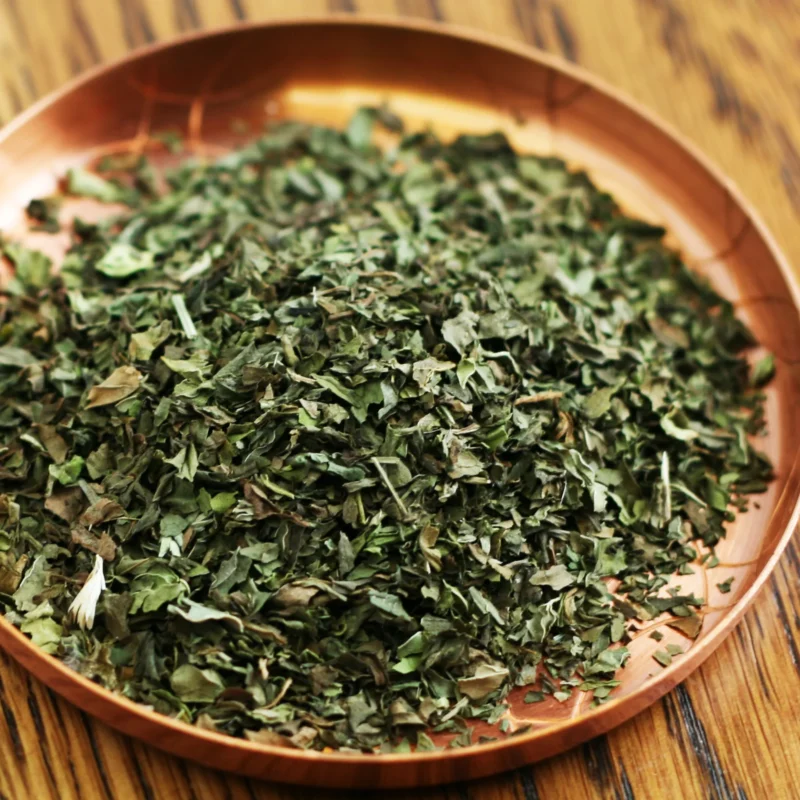
Why dried mint uses are preferred over fresh mint in tea manufacturing
Although fresh mint is widely used in home kitchens and restaurants, it cannot be used on large scale production of tea. Dried mint has important benefits that give it the top choice of tea manufacturers:
Extended shelf life: Fresh mint spoils in a few days, and dried mint can last 1218 months in proper storage condition without loss in essential oils.
Consistent aroma and flavor: The drying process does not change menthol which is the herb that gives mint its coolness and has a consistent flavor throughout the different teas.
Economical logistics: Dried mint weighs less, it is not perishable and transporting it across the borders is less expensive and wasteful than fresh herbs.
Scalability: Tea blenders in the industry demand large quantities of homogeneous cut leaves. The dried mint can be standardized into certain cut sizes that cannot be done to fresh mint.
To manufacturers of tea, all these advantages mean direct reduction of the production risks, quality control and the capability to meet consumer expectations across the globe. These practical dried mint uses explain why the herb has become indispensable in large-scale tea production.

Some dried mint uses in the herbal tea industry
Applications of dried mint cut across various product lines in the business of herbal teas. Understanding dried mint uses helps importers and manufacturers maximize product innovation. The most significant applications are:
Single-ingredient mint tea
Mint tea is one of the most popular herbal teas in the world. In the North African region, dried mint is made strong and sweet and in Europe and the United States, peppermint tea is famous due to its digestive and soothing properties. To make the tea companies consistent, the dried mint leaves are used so that they can be offered throughout the year.
Blended teas
Dried mint pairs well with other botanicals to create balanced tea blends. Common combinations include:
Mint + Chamomile: for relaxation and sleep support.
Mint + Lemongrass: for a refreshing citrus-mint profile.
Mint + Hibiscus: for a tart, cooling summer drink.
Mint + Ginger: for warming yet refreshing blends.
These blends are sold globally in teabags, loose-leaf packaging, and ready-to-drink bottled teas.
Functional and wellness teas
Digestive properties of Mint qualify this tea to be a natural ingredient of detox, digestion support, and weight management teas. These health-oriented dried mint uses make the herb particularly attractive to nutraceutical brands. Numerous brands of nutraceutical utilize dried mint in functional tea lines with specific natural health benefits.
Tea formats beyond loose leaves
Teabags: requiring uniform cut size and dust-free processing.
Instant tea powders: where dried mint is extracted for concentrated flavor.
Herbal infusions for RTD beverages: extracts of dried mint were bottled and sold as a refreshing and healthy drink.
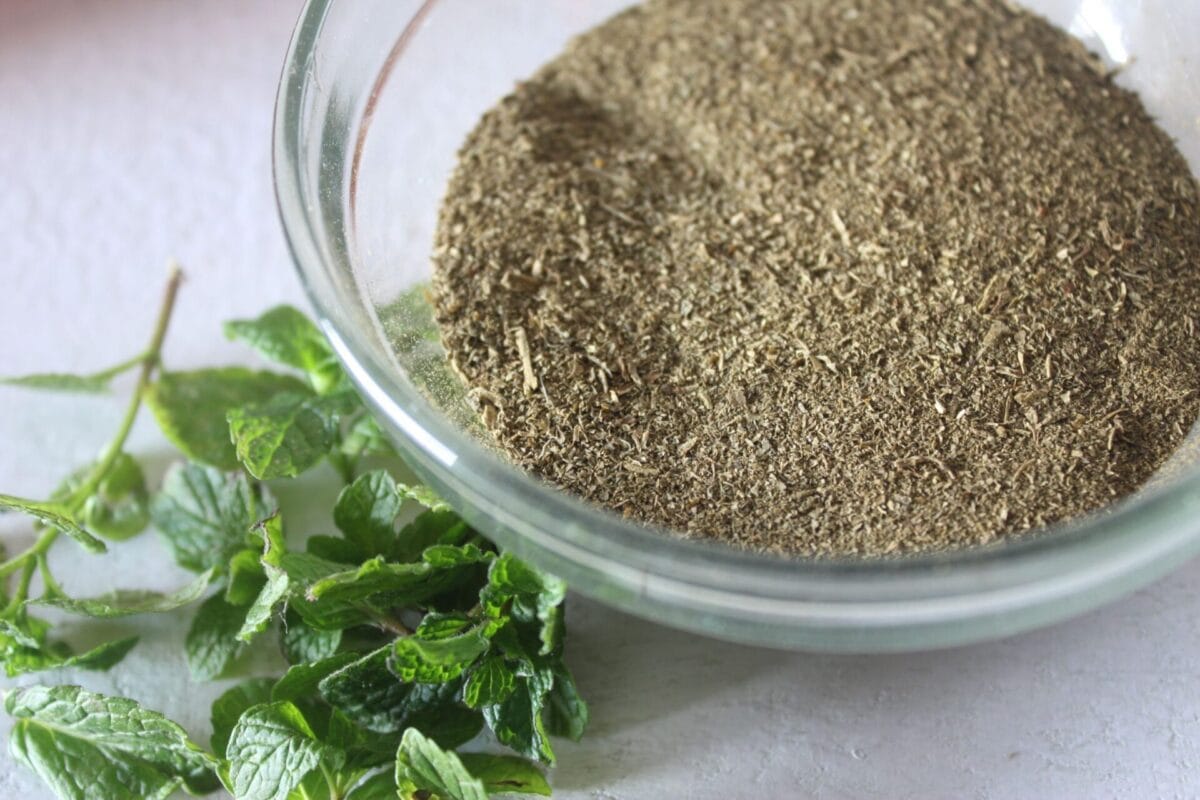
Vietnam’s advantage as a reliable supplier of dried mint uses for tea producers
Whenever the global tea companies seek the dried mint; they always refer to the traditional sources like Morocco, Egypt or India. Nonetheless, Vietnam has gradually become a competitive supplier due to its conglomeration of natural factors, cost benefits, and good export power. The tropical and subtropical climatic condition means that mint is growing all year round and there are no seasonal shortages. Simultaneously, Vietnam enjoys a competitive cost base over some of the traditional suppliers and importers have the option of better prices when making bulk purchases.
The modern processing facilities such as drying and cutting facilities that are internationally acceptable have also invested in Vietnam in recent years. This helps suppliers to provide dried mint of standard quality, cut sizes and standard food safety requirements required by international tea producers. In addition, the agricultural industry in Vietnam has many years of experience in exportation of herbs, spices, and teas on a large scale, which has placed it in a good position to handle large scale orders without compromising on the reliability. All these strengths make Vietnam a more and more appealing sourcing destination to companies that intend to diversify their supply chain and find a reliable partner in the herbal tea business.
Conclusion
Dried mint is not a kitchen herb only. In the case of the herbal tea industry, it is a strategic ingredient with diverse dried mint uses that provide flavor, health-wise and consumer-appeal across the international markets. Dried mint, in comparison to fresh mint, has a better shelf life, uniformity, and is more cost-effective, which is why large-scale tea production can no longer be achieved without it.
With the increased demand in the use of herbal teas, tea producers and distributors will still be interested in sourcing manufacturer quality dried mint. Vietnam has good growing conditions, competitive prices and advanced capacity to process herbs and this means that the country is well placed to be a reliable supplier of dried mint to the companies worldwide that manufacture herbal tea.
Get in touch with Greatfoods today and find the high quality dried mint in Vietnam and make your herbal tea range have a reliable supply partner.
For inquiries and orders, please contact us at:
- Facebook: Greatfoods
- Youtube: Greatfoodsvn
- Email: [email protected]
We are happy to partner with you in the future!