


Explore with us cashew nut production where the sustainable growing techniques are combined with the nutritional excellence that the owner of the livestock farm can use to get a nutritious, and ecological balanced food for his animals; thus boosting their productivity and health.
The cashew nut production in Vietnam
For a long time, Vietnam has managed cashew nut production through the Ministry of Agriculture, which helps control the entire growing and processing of cashew. Cashew trees over 20 years old account for more than 24% of Vietnam’s 330000 hectares cashew nut production.
Vietnamese cashew producers rely extensively on suitable weather conditions, such as climate, illumination, rainfall, and humidity. In example, the majority of the places where cashew growers grow cashews have temperatures ranging from 24 to 28 degrees Celsius. Furthermore, most of the places where cashew farmers grow this crop receive nearly 2000 hours of lighting each year, which is ideal for the production of high-quality cashew nuts.
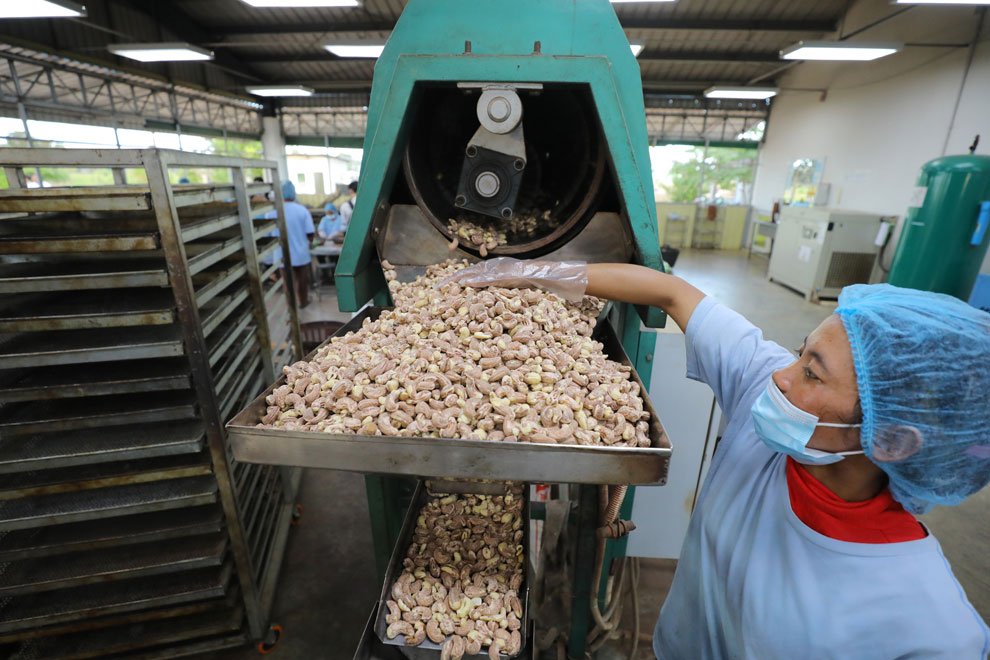
In cashew nut production, cashew nuts are cultivated in a variety of soil types, including sloppy plains. These soils are nutrient-rich, with a high organic dipole and excellent drainage. These areas have ideal rainfall throughout the year, however marshes and salty soils are not desirable.
Cashew nuts are the well-balanced seeds that provide protein, healthy fat, and the selection of vitamins and minerals crucial to livestock well-being. Working cashew nuts into the feeding programs for livestock may improve the digestion and immune function of animals and will be consequently reflected onto their health. The fact that their friends, cashew nuts in this case, are not only sustainable but also economically efficient, makes cashew nuts probably the best option for farmers who are looking for approaches of improving the quality of animal feeds.
Cashew nut production – Processing of cashew nut
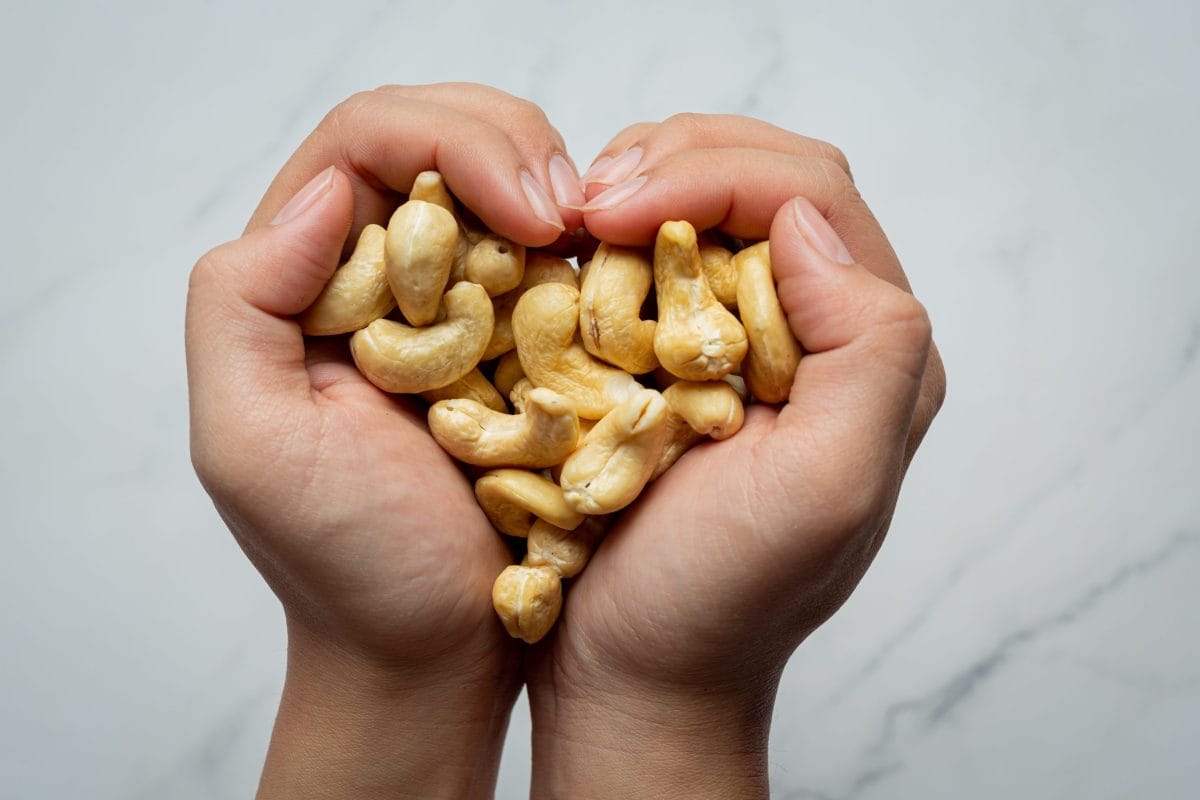
In cashew nut production, raw cashew nuts are also referred to as unshelled cashew nuts; the exterior shell is tough as well as hard, and it includes Anacardic acid, leading to serious burns on human skin. Consequently, the method of manufacture product must be properly prepared along with inspected to minimize hazards.
Step 1: Preparing Raw Material
Once the cashew nut has ripened and dropped off, the harvester of cashews will separate the raw nuts from the cashews. When extracting the nut from the cashew, be sure that no part of the cashew remains in the nut. The nutritional value of raw cashew nuts will suffer substantially if the cashew as well as cashew nut are not entirely separated.
Step 2: Sun-dried raw cashews
After sorting the raw cashew nuts, we’ll dry them in the sunlight for at least two days. Unshelled cashew is typically sun-dried and continually agitated after harvesting until the moisture level of the nut reaches 8-10%.
Step 3: Steaming raw cashew kernels
After being sun-dried, raw cashew nuts are transported to the factory that processes. Steams raw cashew nuts to get rid of the tough outer layer, which is then separated to acquire the kernel.
Step 4: Severing the rigid shell
In cashew nut production, the factory gets raw cashews and processes them for shelling as well as husking. After boiling the cashew shell to soften it, the raw cashew nut’s shell is removed using a specialized knife to reveal the interior kernel. This is a challenging stage that requires trained professionals to separate the shell without destroying the interior kernel of cashew.
Step 5: Drying the cashew kernels
After peeling, sun-dry the cashew kernels or on a machine to keep them for a long period. Cashew kernels have a moisture content of 3-4% suit export specifications and last longer. Furthermore, it creates the silky shell of cashews easier to remove.
Step 6: Eliminating the cashew shell
To access the cashew kernel, removing the cashew’s silk skin. Following 12 hours of exposure to the open air, the kernels are removed in their silk skins. This chilling will make cashew nut shelling easier. Following that, the white nuts are delivered to the sorting section.
Step 7: Color Sorting and Quality Evaluation
The grading method classifies white cashew kernels into many classes. Nuts are typically graded based on their color, size, and texture. The categories are based on international standards.
Step 8: Metal Detector
Before packing, cashew kernels must be inspected for contaminants with a metal detector. Cashews are wrapped in a variety of plastic bags for purchase or distribution.
Step 9: Packing and storage
In cashew nut production, the packaging and wrapping used to carry cashew kernels must be strong enough to withstand external pressure without damaging the interior. The cashew packaging is meant to safeguard the goods, and its dimensions must be suitable with normal pallet and container specifications.
Conclusion
Are you ready to discover the world of cashew nut production? Visit our website Greatfoods to discover more and begin your journey to healthier, more successful cattle farming. At the Greatfoods, we strictly adhere to these procedures to ensure that all cashews are safe to consume, nutritious, and in perfect condition by the time they reach your animals’ diet. Our staff will explain how challenging it is to keep cashews whole during the process. If you require any assistance, kindly get in touch with us as soon as you can at [email protected].
With the production and packaging process, we demonstrate professionalism and perfection in each stitch. Each item/product has a unique packaging style that closely adheres to the regulatory requirements of clients. Greatfoods is always the first/top choice for your agricultural products.